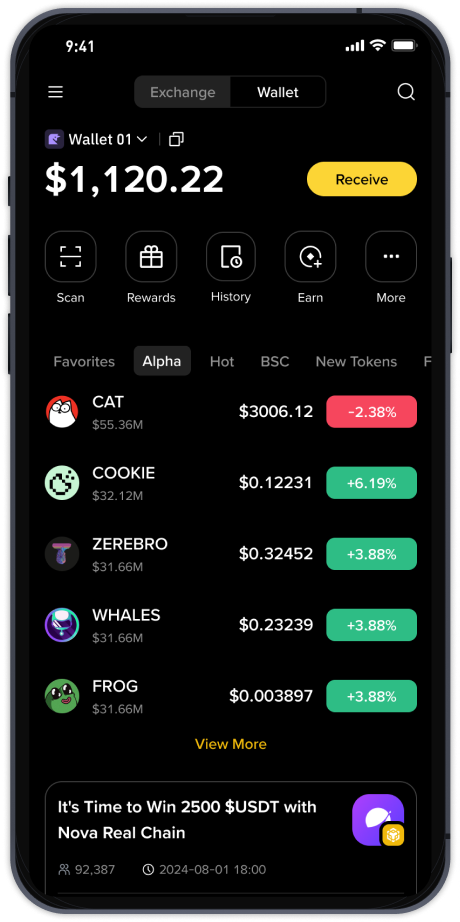
Binance Wallet Review 2025: Features, Security & User Experience Explained
When exploring the world of cryptocurrency storage, one question frequently arises: "How good is the Binance Wallet?" As the official self-custody wallet developed by Binance, one of the largest crypto exchanges globally, this tool has garnered significant attention. This review will break down its core features, security measures, supported blockchains, and overall usability to help you decide if it is the right choice for your digital assets.
First and foremost, the Binance Wallet is a non-custodial wallet. This means you, and only you, hold the private keys to your funds. Unlike holding assets directly on the Binance exchange, where Binance manages the keys, this wallet gives you full control. This is a fundamental advantage for users who prioritize the principle of "not your keys, not your coins." The wallet is available as a browser extension and as a mobile app, making it accessible across different devices.
One of the standout features is its multi-chain support. The Binance Wallet is not limited to just the BNB Smart Chain (BSC). It also supports Ethereum (ETH), Polygon (MATIC), Avalanche (AVAX), and other major layer-1 and layer-2 networks. This interoperability allows users to manage a diverse portfolio of tokens, NFTs, and DeFi assets from a single interface. The built-in DApp browser is another crucial component, enabling you to connect directly to decentralized applications for swapping tokens, lending, staking, or minting NFTs.
From a security perspective, the wallet implements industry-standard protection. It uses Secure Enclave technology on mobile devices to isolate private keys from the operating system. The seed phrase (a set of 12 or 24 words) is generated locally and never transmitted to Binance servers. Additionally, the wallet includes transaction simulation technology. Before you confirm a swap or transfer, the wallet simulates the transaction to show you the expected outcome, helping to detect malicious contract interactions or phishing attempts that might drain your assets.
However, no wallet is perfect. A common critique revolves around its integration with the Binance ecosystem. While this integration offers seamless access to Binance's launchpad projects and cross-chain bridges, it can also create a "walled garden" feeling. Some users prefer wallets that are completely independent of any centralized exchange. Furthermore, while the user interface is clean and intuitive for beginners, advanced users might find the options for custom gas fees or RPC endpoints somewhat limited compared to specialized wallets like MetaMask.
In terms of performance, the wallet is reliable and fast. Transaction confirmation times depend on the congestion of the underlying blockchain, not the wallet itself. The recovery process is straightforward: if you lose your device, you can restore your entire wallet using your seed phrase on any compatible wallet platform. This ensures your assets are not permanently lost if your phone or computer is damaged.
To summarize how the Binance Wallet performs today: It is a robust, secure, and beginner-friendly option, especially for those already active in the Binance ecosystem or the BNB Smart Chain. Its multi-chain support and built-in DApp browser make it a strong all-in-one tool for DeFi and NFT users. However, if absolute independence from a centralized exchange is your priority, or if you require highly granular network control, you might want to explore other options. Overall, for the average user seeking a balance of security, convenience, and functionality, the Binance Wallet stands out as a very solid choice in 2025.