Is Binance Good for Your Crypto Wallet? A Complete Guide to Security, Fees & Features

When the keyword "wallet" is mentioned in the context of Binance, most users are actually asking one critical question: "Is Binance a safe and effective place to store my crypto?" The short answer is yes, but only if you understand the difference between a custodial exchange wallet and a private, non-custodial wallet. Binance offers several wallet solutions, and choosing the right one depends entirely on your trading habits and security needs.
First, let’s break down what "wallet" means on Binance. The platform provides a **Custodial Wallet** (often called the Funding Wallet or Spot Wallet). This is the default wallet created when you register. In this setup, Binance holds the private keys, not you. This is convenient for active traders because you can instantly trade, stake, or lend your assets without moving them between different apps. However, as the saying goes, "Not your keys, not your coins." While Binance has an excellent security track record (including a Secure Asset Fund for Users or SAFU), a custodial wallet carries the risk of the platform being hacked or frozen.
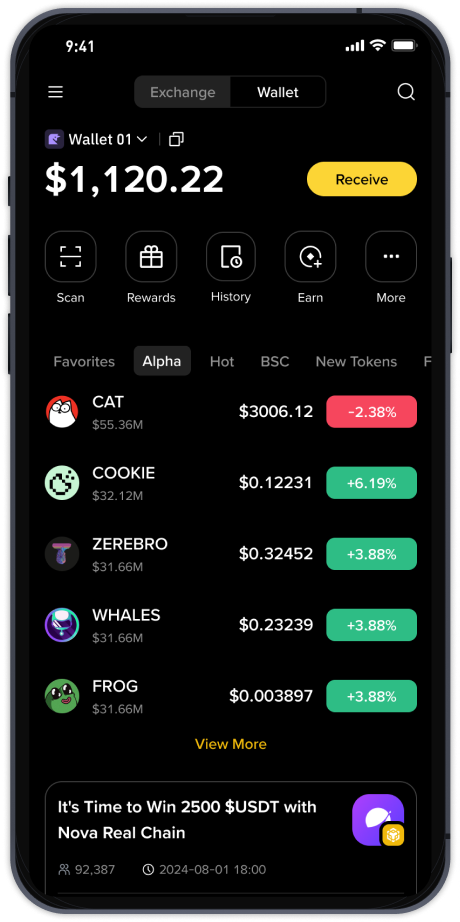
For users who prioritize full control, Binance also integrates with **Trust Wallet**, a non-custodial wallet that Binance acquired. Trust Wallet is a separate mobile app where you control the private keys. This is ideal for long-term holders or users interacting with decentralized applications (dApps) and decentralized finance (DeFi). You can transfer assets from your Binance exchange wallet to your Trust Wallet for safekeeping. The key advantage here is that Binance does not have access to your funds, but the responsibility for backing up your seed phrase falls entirely on you.
From a security perspective, Binance's custodial wallet is considered one of the safest among centralized exchanges. They employ multi-tier system architecture, cold storage for 95% of funds, and mandatory 2-Factor Authentication (2FA). However, security is not just about the platform; it’s about your behavior. Phishing attacks targeting Binance users are common. If you use Binance as your wallet, you must never share your API keys or login credentials.
Financially, using Binance as a wallet is very cost-effective. Internal transfers between your own Binance wallets are usually free. Withdrawal fees are also competitive compared to other major exchanges. For example, withdrawing Bitcoin might cost a flat fee of 0.0005 BTC, which is lower than many alternatives. This makes Binance an excellent hub for accumulating crypto before moving it to a cold storage wallet.
In conclusion, Binance is "good" as a wallet specifically for active trading and as a gateway to the broader crypto ecosystem. It is not recommended as a long-term "bank vault" due to the custodial risk. The best strategy is a hybrid approach: use Binance as your active trading wallet and exchange hub, but store the majority of your long-term holdings in a non-custodial wallet like Trust Wallet or a hardware device like Ledger. If you can manage this balance, Binance is arguably one of the best wallet ecosystems available today.